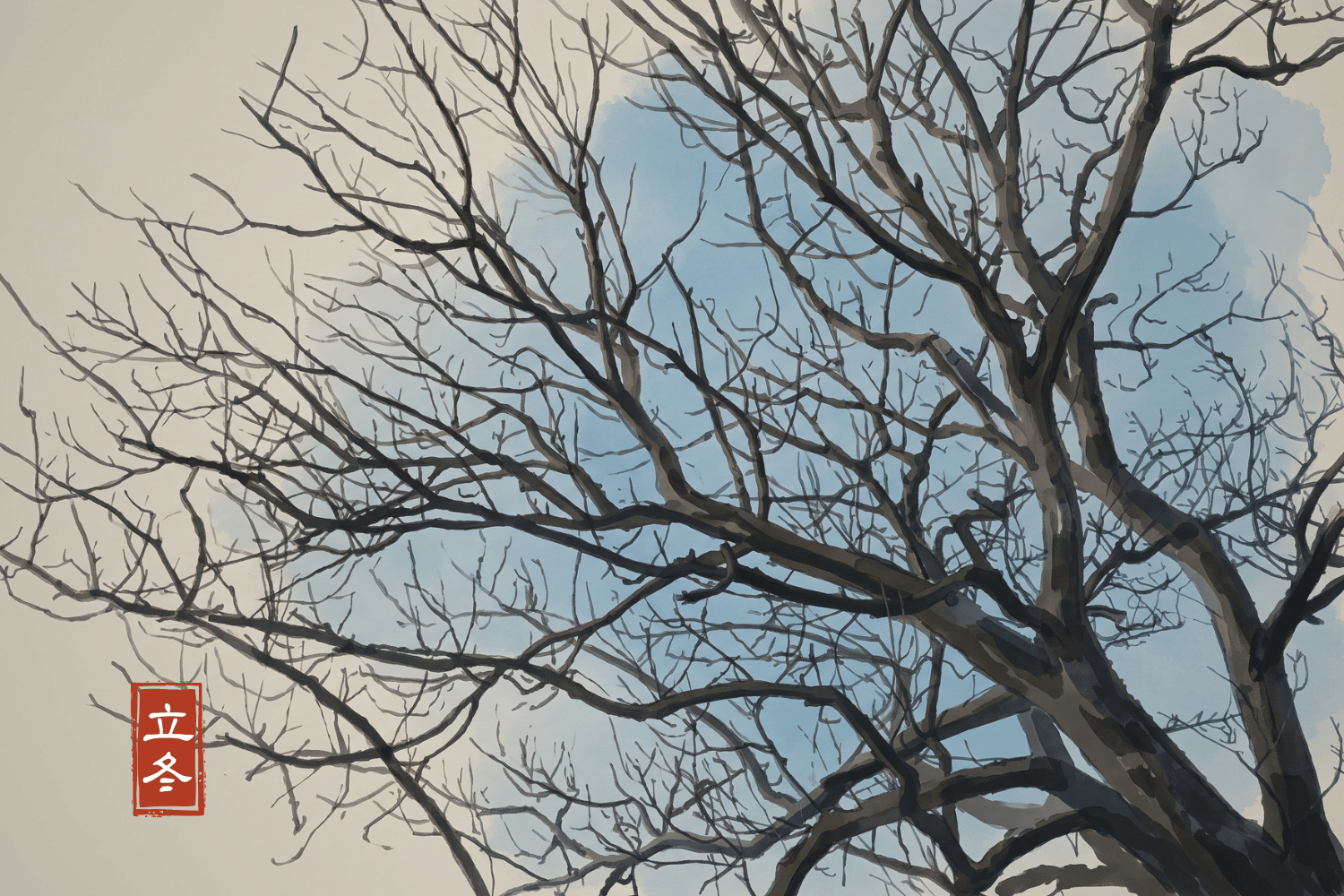
The morning shadows lengthen, the sharp bite in the wind turns unrelenting, and the last remnants of autumn retreat underground. Across northern hillsides, soil begins to harden like stone, signalling the arrival of Start of Winter (立冬, Lìdōng), the 19th solar term and the official opening chapter of winter in the traditional lunisolar calendar.
On the Calendar
In the traditional Chinese lunisolar calendar, Start of Winter marks the transition into the Tenth Lunar Month (十月), historically known as Zhuàngyuè (壮月) or the “Month of Great Winter.”
In 2026, Start of Winter arrives on November 7, 2026, corresponding to the 29th day of the Ninth Lunar Month (农历九月二十九).
The character 立 (Lì) signifies the start or establishment. But the meaning of 冬 (Dōng) is perhaps even more telling. In ancient glossaries like the Shuowen Jiezi, Dōng shares linguistic roots with Zhōng (终), meaning completion or conclusion. As ancient agricultural commentators noted: *”The crops are gathered, and all living things store away.”*Winter is not merely a season of barren cold; it is the purposeful completion of a cycle, an intentional shift toward preservation.
In the Fields: The Great Geographical Freeze
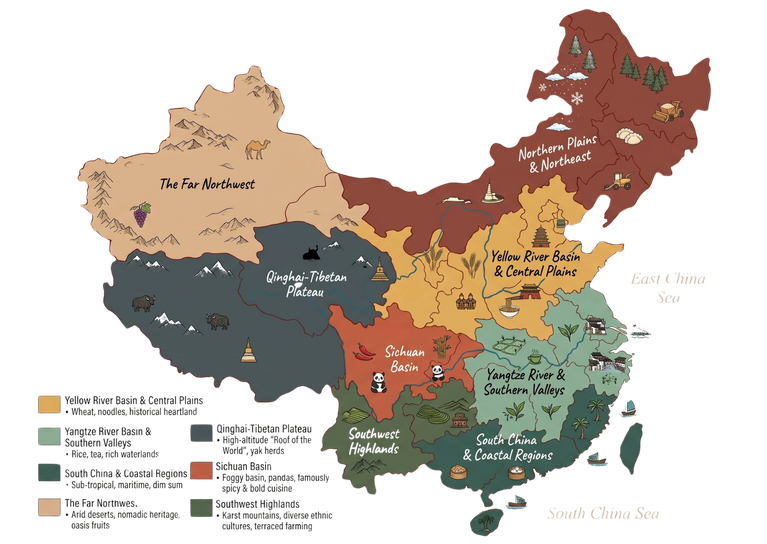
China spans vast latitude lines, and by Start of Winter, the continental landscape fractures into strikingly different realities:
- Yellow River Basin & Central Plains: Late-planted winter grains settle in, and orchards wrap tree trunks with straw skirts to guard bark against split-freezes and northern gusts.
- Yangtze River Basin & Southern Valleys: Winter arrives gently here. The sun retains a pleasant, lingering warmth, late-season rice paddies undergo their final clearing, and farmers sow overwintering rapeseed crops to carpet the fields in yellow come early spring.
- South China & Coastal Regions: Subtropical regions experience little perceptible chill. Life continues outdoors with vibrant winter vegetable plantings and coastal catches at their absolute sweetest.
- The Far Northwest: The transition is swift and absolute. Mountain passes are blocked by heavy early blizzards, alpine pastures fall silent as herds complete their move to lowland winter shelters, and temperatures plummet past freezing into single digits.
- Northern Plains & Northeast: The soil enters a deep, months-long freeze. Winter wheat seedlings halt vertical growth and harden their root systems beneath the crust. Fieldwork ceases completely, and rural communities settle into the rhythm of Dongxian (冬闲), the winter rest period.
Fogged Glasses and Quilted Doors
Where I grew up in northwest China, Start of Winter arrived as an immediate physical divide between two completely different worlds.
By early November, municipal central heating kicks into full gear. Outside, the temperature hovers at freezing or drops well below zero, but indoors, are so thoroughly heated that you find yourself lounging in a single layer of long thermal underwear(at home of course).
This is the exact time of year when your glasses start getting fog over the second you step inside any doorway.
To keep the biting northern draft from cutting through buildings, public spaces like schools, hospitals, shopping malls, and government buildings hang enormous, thick canvas thermal curtains(now with a vinyl coating) at the main entrances.
Pushing through them was an athletic feat. Imagine parting two thick duvets that have been soaked through with water. You lean your whole body weight into the heavy canvas, push your way through the cold fabric, and instantly emerge into dry, radiator-scented heat…Horray…
The Art of 补冬 (Bǔdōng): Nourishing the Inner Hearth
While heavy screen doors keep the crisp drafts out of buildings, traditional wisdom turned to a different strategy for the human body: 补冬 (Bǔdōng), literally “nourishing the winter.”
Traditional Chinese philosophy views human vitality through the principle of 藏 (Cáng)—the inward storage and conservation of energy. In spring and summer, vitality pushes outward; in winter, life pulls deep into the roots. Autumn was about preserving the pantry; Start of Winter is about fortifying the body from within so you don’t exhaust your core reserves against the cold.
This need for internal insulation created rich regional food rituals across the continent:
- Northern Dumplings: In some areas in the north, families gather around wooden boards to fold dumplings, the absolute stars of the season.
- Mutton and Root Broths: Across northern and northwestern regions, heavy cauldrons of bone-in mutton simmer with onion, white pepper, and sweet daikon radish or carrots. Rich in protein and warming Yang energy, hot broths build internal heat against sub-zero nights.
- Southern Tonic Pots: In Fujian, Taiwan, and the south, herbal preparations like sesame oil chicken (Mayouji), duck braised with ginger (Jiangmuya), and slow-simmered medicinal rib broths (Sixin Decoction) take centre stage, nourishing Qi and circulating blood to cold fingertips and toes.
Nourishing the winter was a practical biological insulation, ensuring the body enters the deepest freeze well-fed and grounded.
Notice the Rhythm Around You
How does the change in air feel in your corner of the world?
Even if you live where winters stay mild, the natural world is still winding down its tempo. Perhaps daylight retreats a few minutes earlier each evening, or due to the Daylight Saving Time (DST), at least in Spain. The brisk air makes hearty soups and hot cups of tea suddenly much more appealing than cold salads.
Take a cue from the season this week. Pull on your heaviest socks, put a slow broth on the stove, and allow yourself the space to step back from the constant rush.
When the earth outside begins to store away its energy, keeping warm from the inside is the best kind of rhythm you can keep.
Stay in Sync with the Seasons
Explore traditional rituals, seasonal eating, and upcoming solar terms with our curated English calendar feed.
Explore the Lunisolar Calendar Feed →