
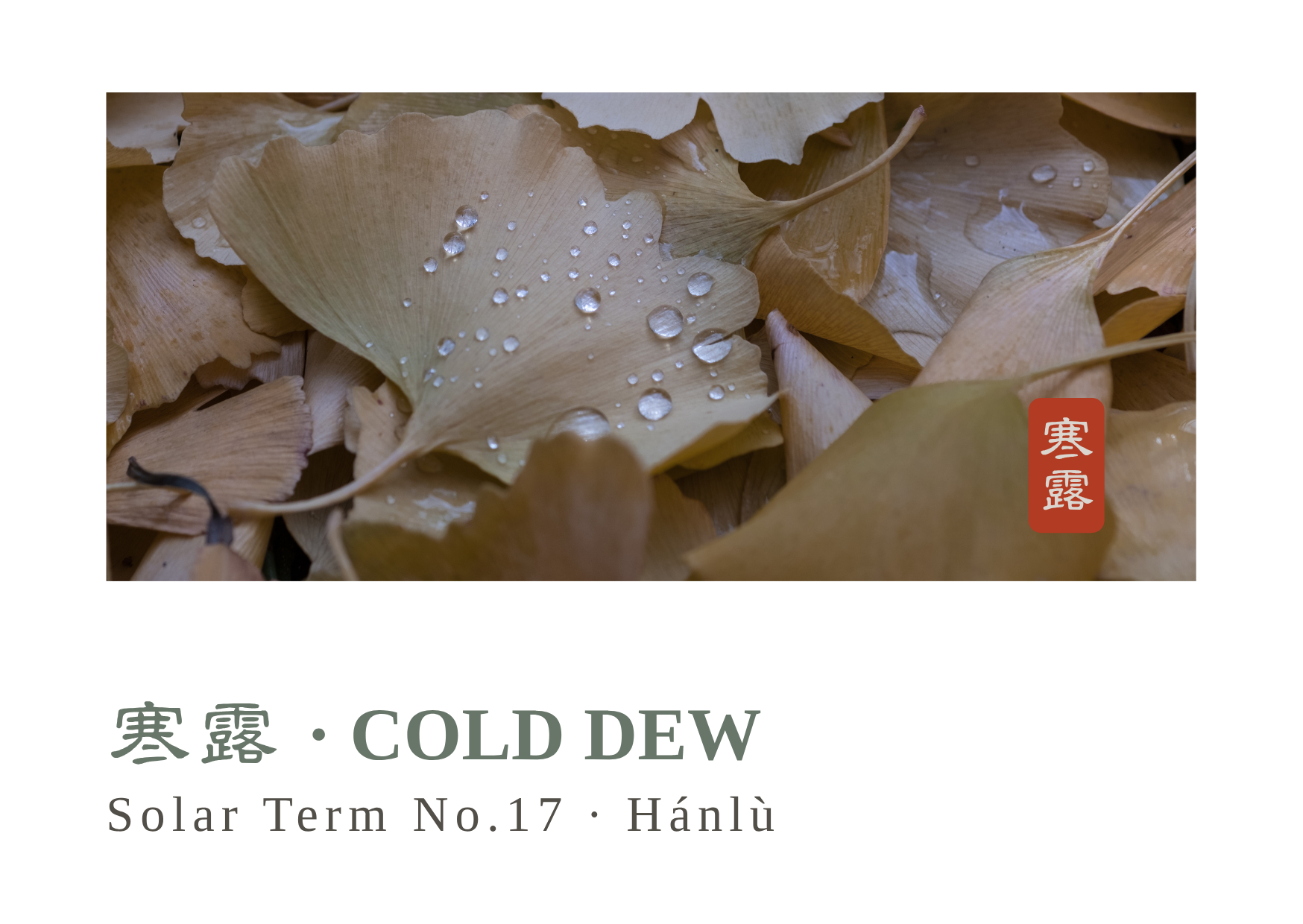
Cold Dew
Cold Dew: Finding Quietness in Late Autumn
As the autumn wind settles, the temperature drops noticeably across the landscape. The morning dew, which once shone softly under late-summer skies, now cools down to near freezing—signaling the arrival of Cold Dew (寒露), the 17th solar term of the traditional lunisolar calendar.
On the Calendar
In the traditional Chinese lunisolar calendar, Cold Dew typically marks the arrival of the Ninth Lunar Month (九月). In 2026, due to an intercalary leap month earlier in the year(Leap 6th Lunar Month), Cold Dew falls on the 28th day of the Eighth Lunar Month (农历八月二十八), corresponding to October 8, 2026 on the Gregorian calendar.
It marks the transition from mid-autumn into late autumn—a fleeting period where the air clears, the sky deepens into a sharp blue, and nature begins its quiet turn inward.
In the Fields: Harvest & Sowing
For traditional agricultural life in China, Cold Dew is a pivotal moment of balance between harvesting and preparing for the cold months ahead:
Northern Plains: Farmers finish harvesting autumn crops like corn, sorghum, and sweet potatoes, while busily sowing winter wheat before the ground freezes.
Southern Valleys: Late-season rice ripens into golden waves, ready for harvest, while tea growers gather the coveted Cold Dew Tea (寒露茶)—prized for its subtle, sweet aroma and smooth finish.
It is a season defined by completion: gathering the fruits of past labor while planting seeds that will rest quietly underground until spring.
A Quiet Pause
When daily clutter and digital noise begin to crowd your peace, allow the season’s quiet rhythm to anchor you. Pour a cup of warm tea, step back from the noise, and explore our practices for simple, hands-on rituals to help you reclaim your space.
Cold Dew is a subtle invitation to turn inward. As the year enters its final quarter, consider what you are ready to harvest—and what needs quiet space to rest.
Something to chew on
China spans vast climate zones, so Cold Dew wears many faces across the continent. While northern regions may experience crisp frosts and cool northern breezes, southern valleys remain pleasantly mild with golden sunlight, and high-altitude mountain ranges prepare for early snows.