As late autumn arrives, the morning air turns from crisp to biting. In the traditional lunisolar calendar, this transition is Cold Dew (寒露, Hán Lù)—the 17th solar term marking a sharp drop in temperature. Nature is drawing its energy inward, inviting us to slow down, stay warm, and nurture our bodies.
Local Life & The Diaspora Reality
If you ever visit China around early October, Cold Dew is a magical time to experience local autumn life:
Hike Famous Peaks: Join locals “climbing high” (登高) to clear stagnant energy—head to Mount Huangshan (Anhui) for sea-of-clouds vistas or Mount Yuelu (Changsha) for vibrant, sweeping autumn foliage.

Chrysanthemum Exhibits: Many cities turn into living botanical gardens. In Shanghai, venues like Yuyuan Garden and Shanghai Botanical Garden host iconic annual Chrysanthemum Exhibitions (菊展) that transform city corners with elaborate floral displays.

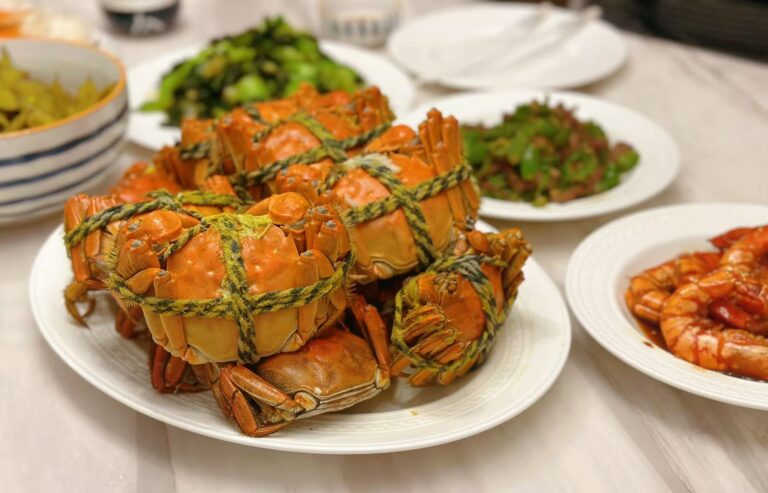
Savor the Peak Crab Season: This is prime time for Yangcheng Lake Hairy Crabs (阳澄湖大闸蟹). Locals pair the rich, buttery crab roe with warm Shaoxing yellow wine to balance the autumn cool.
Yet, the “standard” lunisolar calendar traditions have always played out differently depending on where you call home.
For me, this disconnect is deeply personal. I was born and raised in Xinjiang—a vast, remote region in northwestern China where the dramatic climate shifts rarely align with the official lunisolar calendar markers. Most of us living there were second- or third-generation “migrants” from across China. We didn’t have the luxury of climate-aligned traditions, but we kept our roots alive through oral traditions passed down by our grandparents or great grandparents.
Back then, long before modern logistics and high-speed infrastructure reshaped China, fresh water delicacies like Hairy Crabs could never reach our distant corner of the country. But Chrysanthemum tea could. No matter how remote the town or parched the landscape, every household had it. It was our universal comfort, a gentle constant that bridged thousands of miles.
The same as living outside China, regional signature ingredients can be hard to find. But seasonal living isn’t about rigid perfection; it’s about mindful adaptation. A quick trip to your local Asian grocery store holds everything you need for a comforting autumn ritual right in your kitchen.
Golden Dew Tea: A Home Recipe for Late Autumn
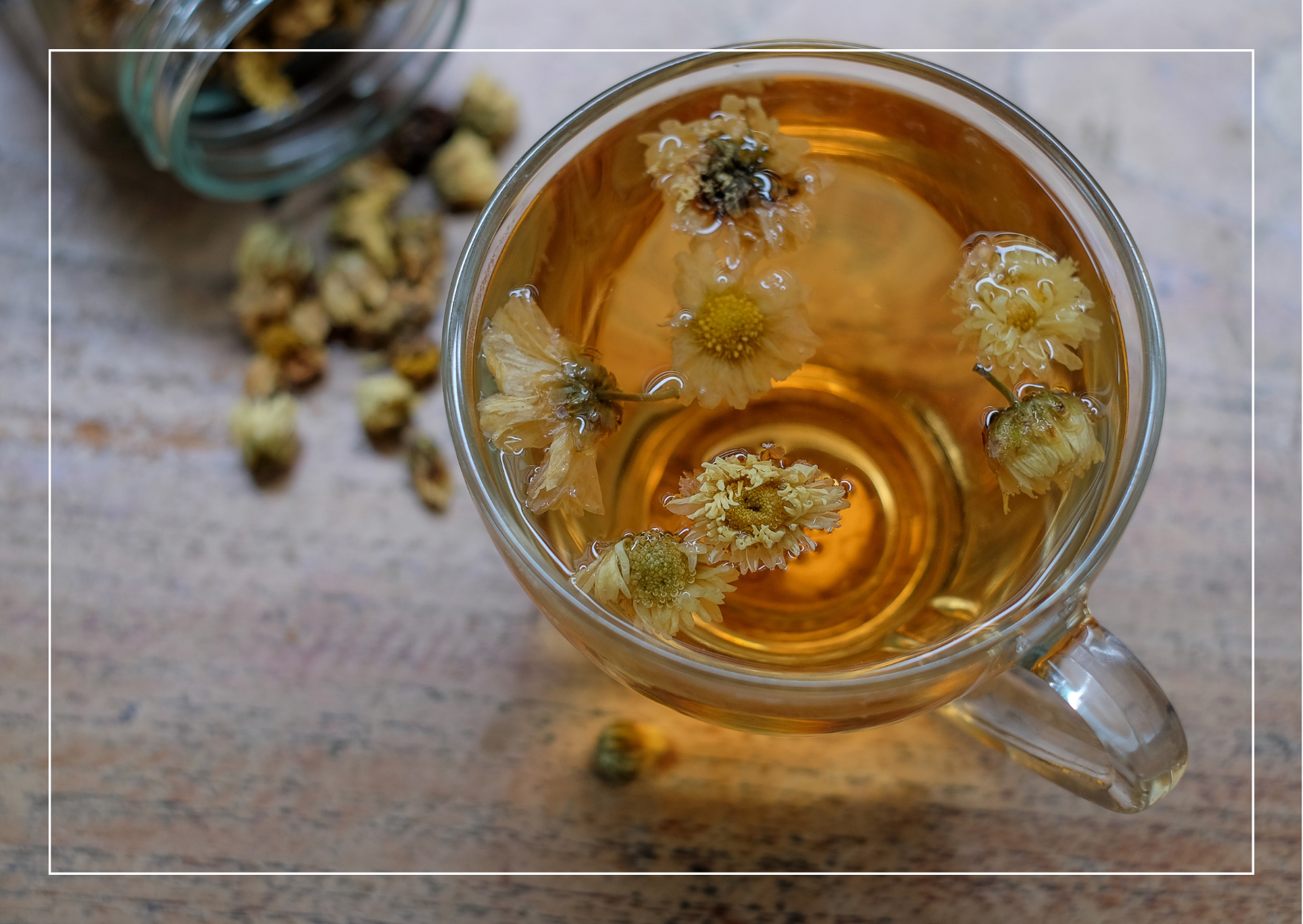
In Traditional Chinese Medicine (TCM), autumn is ruled by the Lung element, and its primary environmental threat is Autumn Dryness. You might notice it yourself: a scratchy, dry throat, parched skin, or a subtle, lingering thirst that water alone doesn’t seem to quench. Chrysanthemum is nature’s antidote to autumn dryness:
- Aroma & Taste: When steeped, it releases a delicate, honeyed floral scent with a grounding, earthy undertone. It tastes light, crisp, and clean on the palate.
- TCM Function: It clears internal heat, brightens the eyes, and gently clears dryness without chilling the stomach when paired with warming herbs.
The good news is: Dried chrysanthemum blossoms/buds are very easy to find in the herb aisle of almost any Asian grocery store!
As someone who grew up in China but has lived overseas for years, I make a conscious effort to stay connected to my roots. Sourcing ingredients locally and building my own seasonal rituals helps me stay grounded, a practice I hope inspires anyone looking to live in harmony with natural rhythms.
This simple daily brew pairs cooling chrysanthemum with the comforting sweetness of red dates and goji berries for essential autumn throat care.
Ingredients:
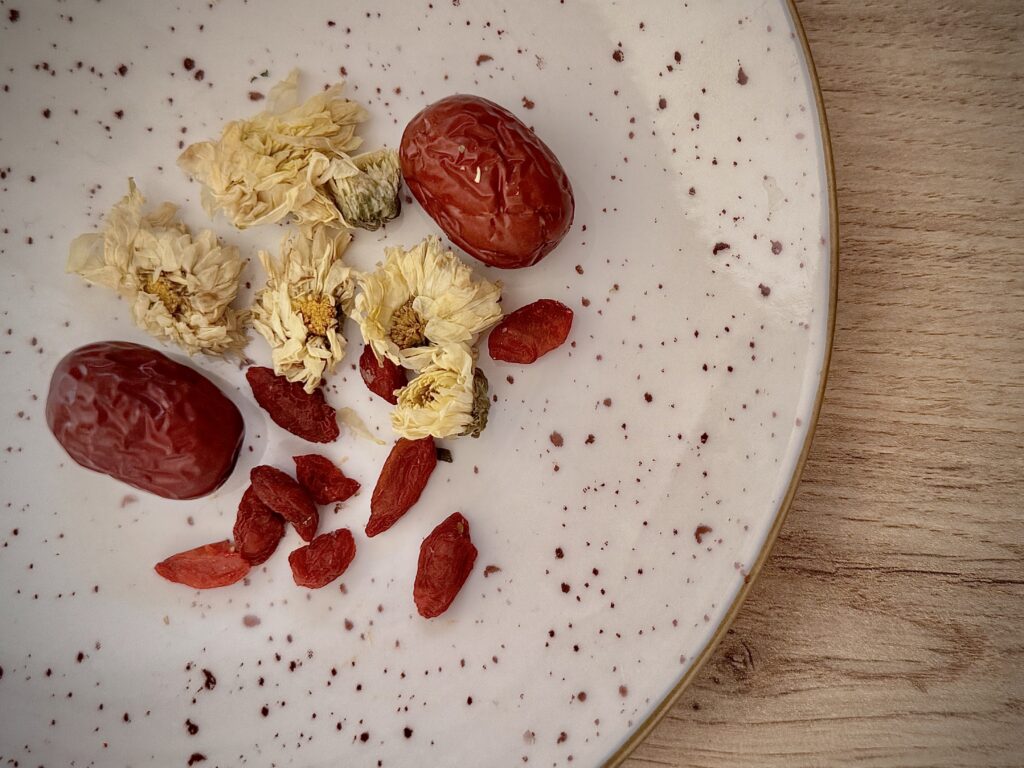
- 3–4 Dried Chrysanthemum Blossoms or Buds
- 4–5 Dried Goji Berries
- 1–2 Dehydrated Red Jujube Dates, sliced or pitted
- 1 tsp Raw Honey or 1 Small Rock Sugar Cube
- 300 ml Fresh Water
Preparation Ritual
- Rinse: Place the Chrysanthemum, Goji berries, and Jujube slices in your mug or teapot. Give them a quick rinse with warm water and drain.
- Steep: Pour hot water over the ingredients. Cover and steep for 5–7 minutes Watch as the petals slowly unfurl and the tea takes on a soft golden hue anchored by the warm ruby accents of the dates and berries.
- Sweeten: Once the tea cools slightly to a warm drinking temperature, stir in your raw honey or rock sugar. (Adding honey after cooling preserves its beneficial enzymes!)
Finding Your Own Living Rhythm
Living seasonally isn’t about following rigid historical rules. It is simply about noticing the subtle shifts in the air, the light, and your body—and making small, intentional adjustments to stay balanced.
Cold Dew is just one of 24 beats in the year’s natural rhythm. As the days grow shorter and colder, take a moment today to slow down, hold a warm cup of tea in your hands, and feel the season change around you.
Stay in Sync with the Seasons
Want gentle, timely reminders when the earth shifts into the next solar term?
👉 Subscribe to the Sinology Studio Lunisolar Calendar to automatically sync ancient seasonal wisdom, rituals, and recipes straight to your phone or Google Calendar. Let’s practice living in harmony with nature, one solar term at a time.