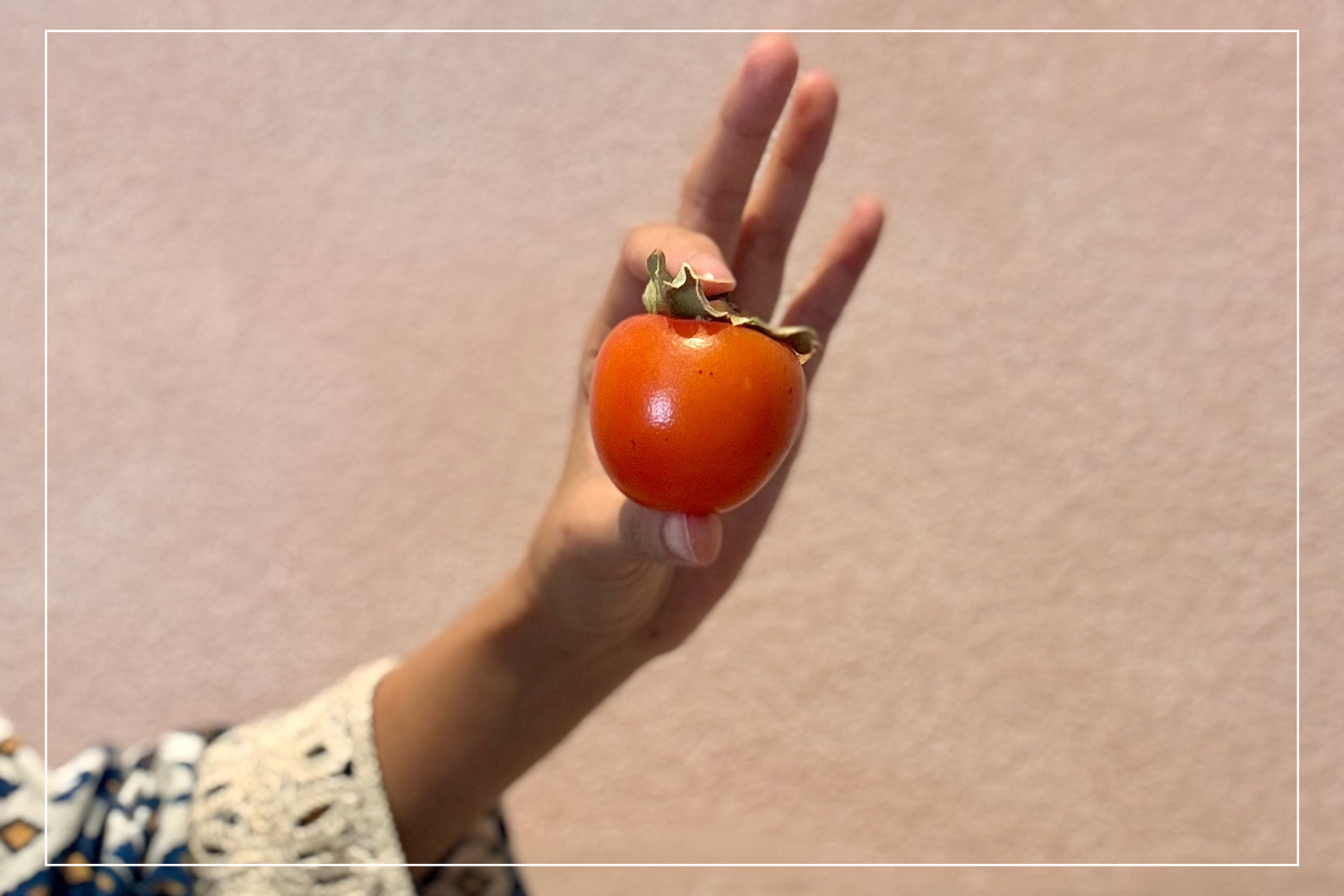
Late autumn brings a sharp chill that changes things. When the temperature drops, persimmons on the branch start converting harsh starches into rich, honeyed sugars.
As mentioned in our Frost’s Descent article earlier on, the season is about preservation. Fresh persimmons are fragile things. Once ripe, they soften fast and bruise under their own weight, so our ancestors figured out a clever way to keep them by transforming them into a dehydrated form called shìbǐng (柿饼).
They look dusted with fine flour. In reality, it is concentrated fructose and glucose crystals drawn out naturally from inside the fruit. In China, people call this coat shìshuāng(柿霜), or persimmon frost.
Nature making its own sugar.

A Childhood Memory: The Organic Persimmon Ice Pop
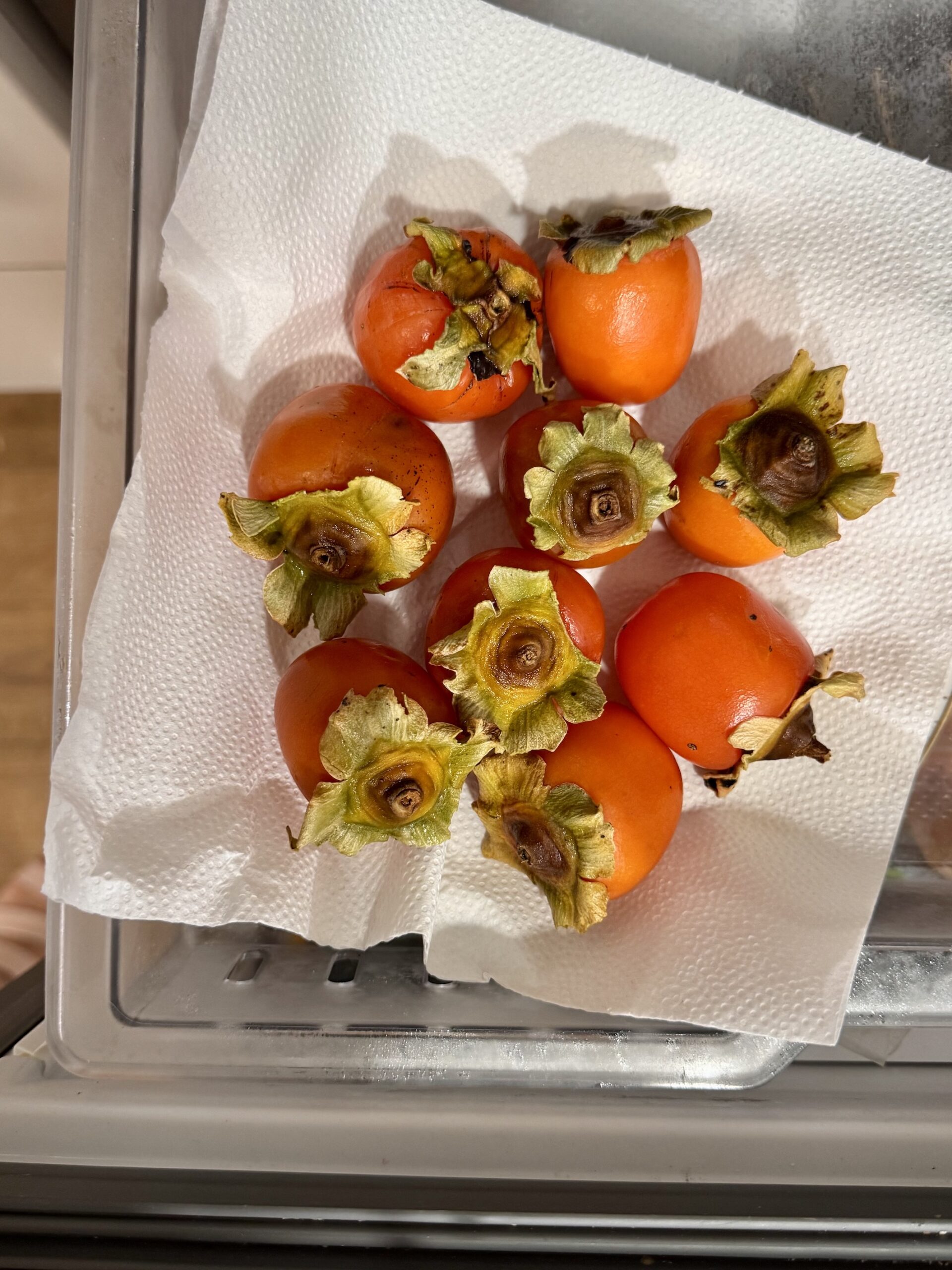
Dehydrating persimmons can be a time-consuming work, but my mother had her own clever trick. She tossed soft, ripe persimmons straight into our home freezer.
The real fun came later.
Xinjiang(northwestern China) winters hit early, and municipal radiator heating usually started right around Frost’s Descent.
When my mother took a rock-hard persimmon out of the freezer and set it on the kitchen table, warm indoor air met the frozen skin.
Within minutes, a delicate layer of real white frost bloomed across the orange shell in seconds.
Magic.
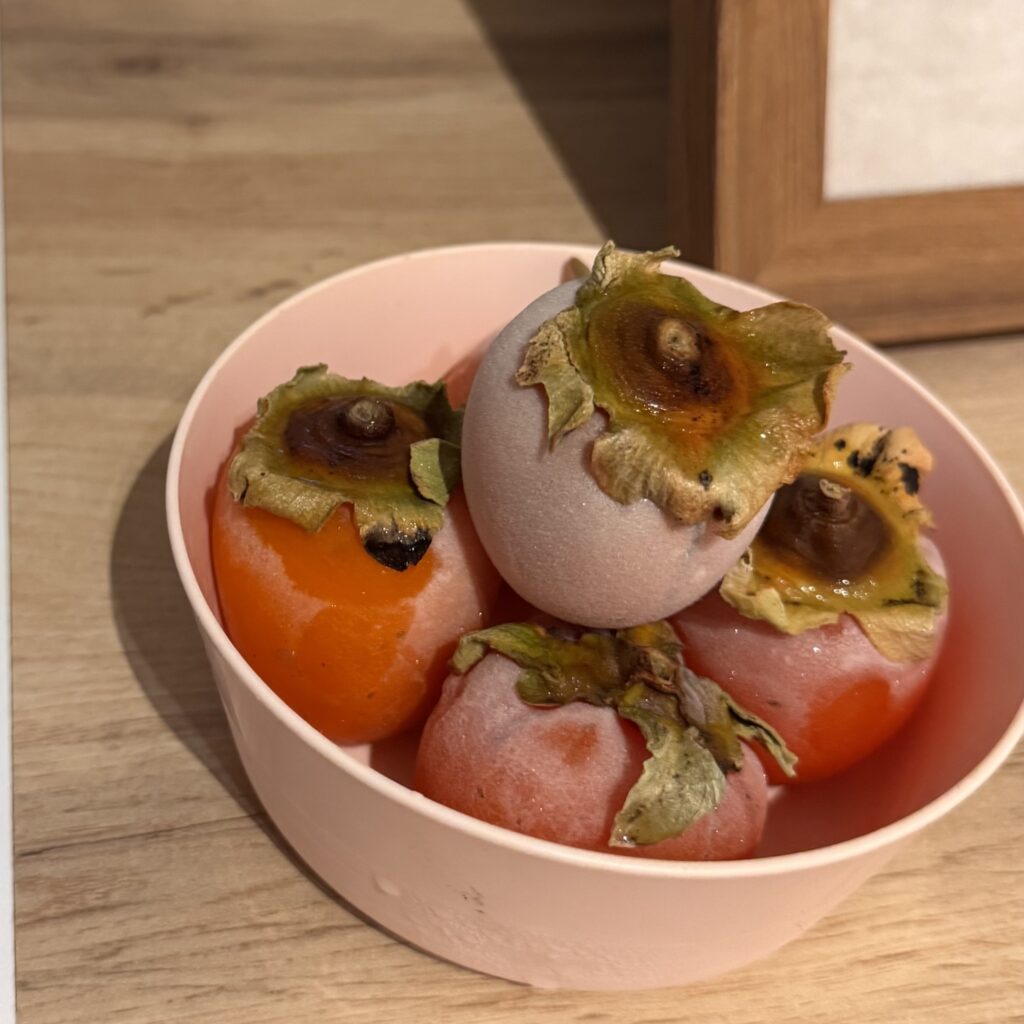
We waited a bit longer until the skin softened enough to peel back like paper. Inside was pure gold, a slushy, cool sorbet tasting of autumn sunshine and dark honey. My favourite childhood ice pop.
Passing the Rhythm: From Xinjiang to Valencia
Now I live in Valencia, Spain. Autumns here are mild and bright, palm trees line the avenues, and local fruit stalls overflow with glossy Spanish kaki.
Geography separates Valencia from the dry, bitter cold of northwestern China by thousands of miles. Yet every October, when local fruterías fill their wooden crates with ripe persimmons, I carry a basket of them home with my son.
Half Chinese and half Spanish, his childhood looks nothing like mine in 90s Xinjiang, but when we place those orange globes into our freezer and watch the white bloom appear on their skins in our warm kitchen, time collapses.
It feels good. A small, quiet way to share my roots and pass down our living rhythm across generations. Let’s admit it, it saves me another round of negotiating over processed chocolate after school.

Frost’s Descent Sorbet: An Organic Dessert
You do not need a northern winter or a cold cellar to practice this ritual. A quick trip to your local grocery store is enough.
- Pick Your Fruit: Choose deep orange, soft persimmons from the market. They should feel heavy with juice.
- Freeze Solid: Wash the fruit gently, wipe it dry, and leave it in your freezer at least 2 hours or longer.
- Watch the Frost Layering: Take the frozen persimmon out and set it on a plate at room temperature. Within minutes, watch a thin layer of white frost form across the skin.
- Savour: Remove the top cap, let it sit for ten minutes until the inside turns slushy, and scoop out the natural sorbet with a spoon. Or, do what I do: insert a popsicle stick and peel the skin right off.
A simple, sweet way to welcome the chill and stay connected to the season.
A Warm Wish to All of You
In Chinese culture, the persimmon holds another sweet meaning this time of year. The word for persimmon, shì (柿), sounds exactly like the word for things or affairs, shì (事). Because of this wordplay, people love using persimmons as a symbol for the traditional blessing shì shì rú yì (事事如意)—meaning “may everything go according to your wishes.”
As we step into this harvest season, I want to send that same warm blessing to you. May your days feel bright, peaceful, and full of good fortune.
Stay in Sync with the Seasons
Want gentle, timely reminders when the earth shifts into the next solar term?
👉 Subscribe to the Sinology Studio Lunisolar Calendar to automatically sync ancient seasonal wisdom, rituals, and recipes straight to your phone or Google Calendar. Let’s practice living in harmony with nature, one solar term at a time.