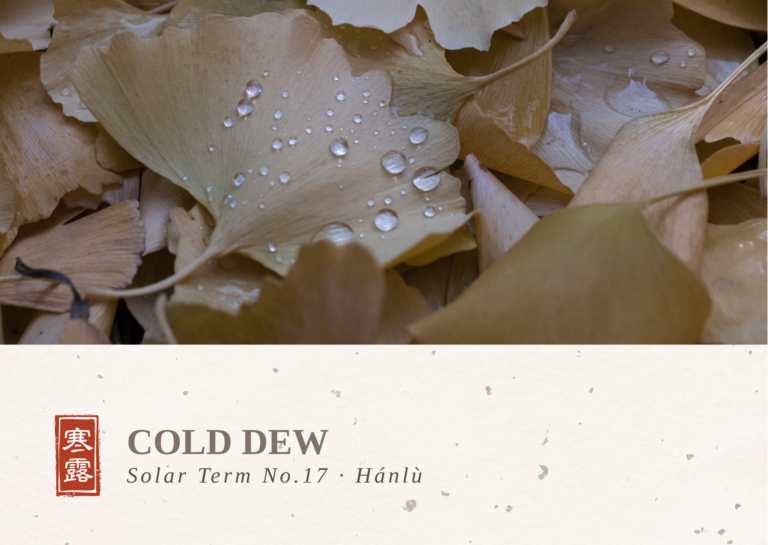
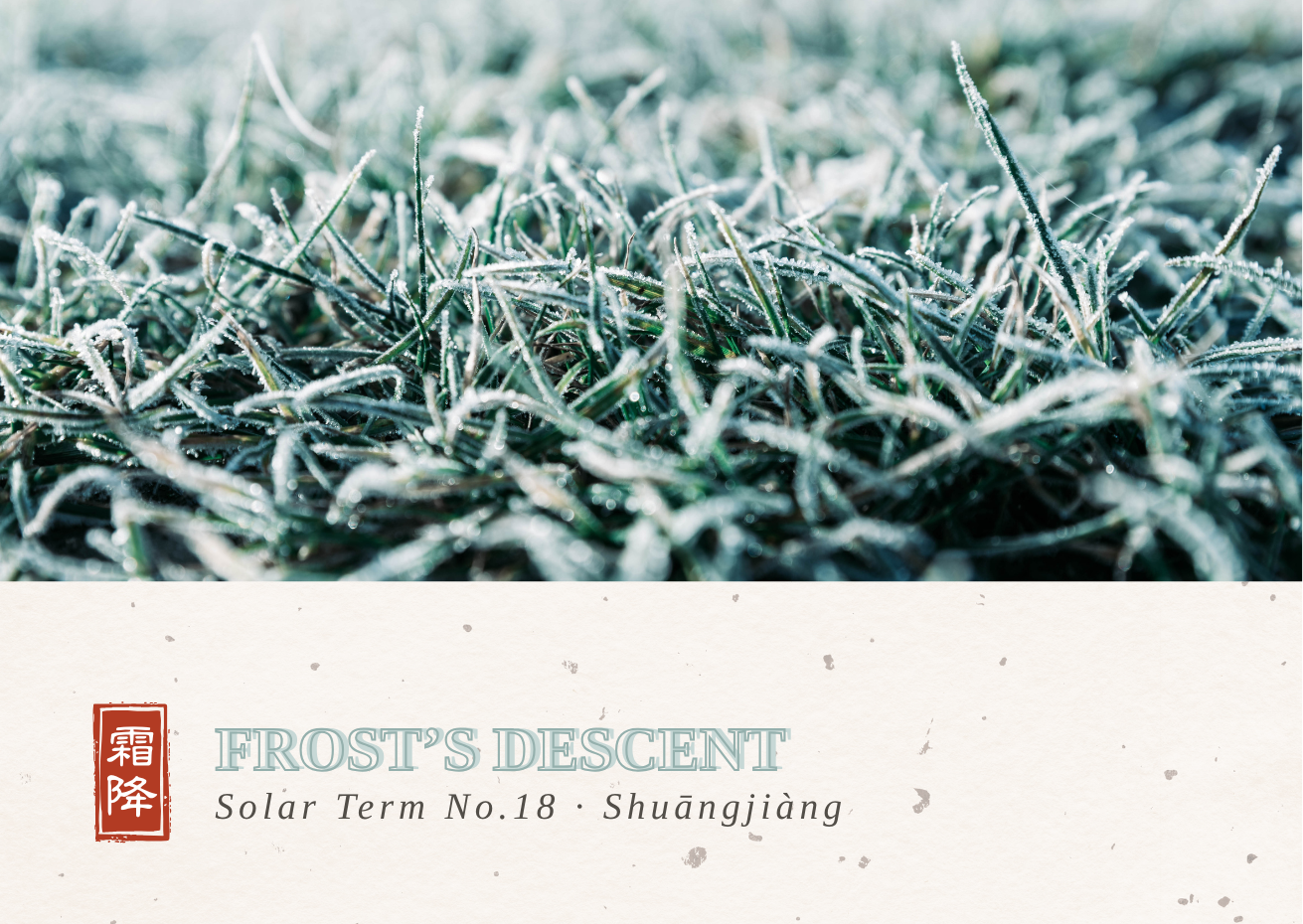
As the last golden leaves of autumn begin to scatter, the night air drops toward freezing. What was once soft morning dew now crystallises into thin white frost across rooftops, fallen leaves, and dried fields, signalling the arrival of Frost’s Descent (霜降), the 18th solar term and the final chapter of autumn in the traditional lunisolar calendar.
On the Calendar
In the traditional Chinese lunisolar calendar, Frost Descent traditionally falls during the Ninth Lunar Month (九月)—often referred to as the “Chrysanthemum Month.” In 2026, Frost Descent arrives on October 23, 2026 (corresponding to the 14th day of the Ninth Lunar Month, 农历九月十四).
As the last solar term of autumn, Frost Descent marks a critical threshold: the final fortnight before Start of Winter (立冬). The landscape shifts from the gentle, vibrant cool of mid-autumn into a crisp, quiet, and stark beauty.
In the Fields: Race Against the Frost
Frost’s Descent brings a sudden drop in temperature and sharp overnight ground frosts. For farmers, frost signals the end of the growing season, an unexpected hard freeze can ruin standing crops by freezing cell walls, causing unharvested tender greens, sweet potatoes, and late-maturing grains to rot in the field.
Because of this threat, agricultural regions across China enter a high-stakes race against time:
- Northern Plains: The threat of ground freeze is most severe here. Farmers urgently dig up starch-rich root vegetables like sweet potatoes, taro, and winter squashes before the hard earth seals shut. In rural areas, some families still rely on traditional underground root cellars, a nature’s zero-energy refrigerator to store bulk harvests of cabbage, potatoes, and radishes in the insulation of the earth to keep them fresh through the sub-zero winter months. Urban cellar storage has largely disappeared due to year-round greenhouse farming, modern logistics, and supermarkets. But oh my, the 50kg cabbages stacking in our backyard, is still a vivid childhood memory of mine.
- In vast pastoral lands like Xinjiang or Inner Mongolia: Frost’s Descent signals the final stretch of autumn migration. Herders move cattle, sheep, and horses down from high-altitude summer pastures to sheltered winter grounds before mountain passes freeze over. Meanwhile, in agricultural oases, farmers wrap up harvests of late cotton, sugar beets, and orchard fruits like crisp apples and fragrant pears.
- The Central Plains & Yellow River Basin: Farmers rush to finish harvesting cotton and late corn, while frantically preparing the soil to sow winter wheat, ensuring seedlings establish roots before severe freezing sets in.
- Yangtze River Basin & Southern Valleys: Late-season rice harvesting is pushed to completion, and fruit orchards race to pick crisp persimmons and citrus fruits before the cold air dulls their flavour and damages the skins.
- Costal area: With the summer fishing ban lifted a few weeks prior in late August and September, late October marks the peak period to enjoy abundant, prime-quality seafood, from sweet coastal crabs to plump cold-water sea fish.
The Art of Preservation: Salting, Pickling & Winter Pantry
If early autumn is about enjoying fresh seasonal bounties, Frost Descent shifts the focus toward preservation.
Interestingly, traditional wisdom holds that vegetables hit by the season’s first frost, especially Napa cabbage, radishes, and mustard greens, grow extraordinarily sweet. In response to the cold, plants convert their internal starches into soluble sugars as a natural “antifreeze” defense mechanism.
This seasonal sweetening makes Frost Descent the universal signal across Chinese households to begin the annual ritual of stocking the winter pantry(now less than ever):
- Salting & Pickling (咸菜 / 泡菜): Enormous earthenware crocks (paocai tan) are brought out, cleaned, and packed with layers of frost-sweetened cabbages, mustard stems, and radishes, weighted down with heavy stones and submerged in spiced salt brine or vinegars.
- Soy & Sugar Marinating (酱菜): In central and eastern regions, vegetables are sun-dried to reduce moisture before being steeped in rich concoctions of soy sauce, sugar, and aromatics, resulting in savory-sweet preserved condiments that can last for months.
- Sun-Drying & Curing: Stalks of greens are hung under eaves to transform into sun-dried preserved vegetables (meigan cai), while southern households begin preparing cured, salted meats (la wei) to dry in the cold, dry autumn wind.
Notice the Rhythm Around You
Is it frosting yet where you live, or is the autumn sun still holding onto its warmth?
Even if the leaves haven’t fully turned in your corner of the world, you’ve probably felt the shift subtle ways. Shop windows have quietly rolled out their heavy winter coats. Coffee shops are advertising their seasonal ginger drinks. Or perhaps, just like me, procrastinating that big wardrobe swap, and pulling out sweaters is suddenly feeling a lot more urgent.
But, hey, take a moment this week to lean into the shift, feet it, and find your own rhythm.